Nutrition
Build a plate, not a diet
Tomas Reyes, FitPath nutrition lead19 August 2026 5 min read
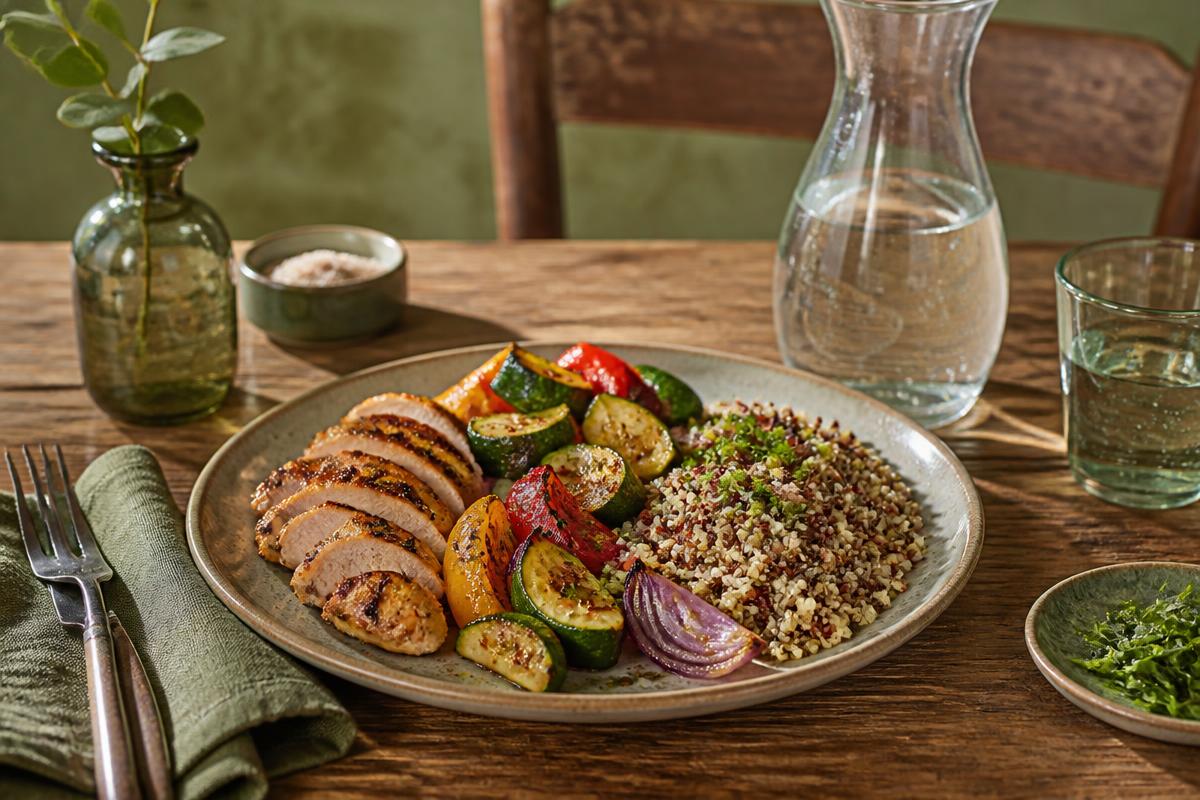
Counting every calorie works until the first week you are busy. A plate template works in canteens, at your mother's table and in an airport. The point is not precision — it is a decision you can repeat without thinking.
The template
Half the plate is vegetables or fruit, a quarter is a protein source you actually enjoy, and a quarter is a starch or grain. Add a thumb of fat — olive oil, nuts, yoghurt — and you have a meal that keeps you full for four hours.
If your goal is fat loss, keep the template and shrink the starch quarter slightly. If your goal is muscle, keep the template and add a second protein portion. You do not need a different diet for a different goal; you need a different dial on the same plate.
- Protein at every meal: eggs, dairy, fish, poultry, beans, tofu or lentils.
- Two colours of vegetables per plate — variety does the work supplements claim to do.
- Starch sized to your day: more on training days, less on desk-bound ones.
Plan three meals, not thirty
Choose three breakfasts, three lunches and three dinners you can cook without a recipe. Rotate them. Decision fatigue is what ends most nutrition plans, and a short menu removes it entirely.
Keep one no-cook fallback in the cupboard: tinned fish, oats, frozen vegetables. The meal you can make when you are exhausted is worth more than the meal you make when you are inspired.
Drink before you snack
Mild dehydration reads as hunger for a lot of people. Have a glass of water and wait ten minutes before deciding you need food. Aim for pale-straw urine as your gauge rather than a fixed litre count, and treat sweet drinks as dessert, not hydration.
Want this applied to your week?
The quiz turns these principles into a schedule built around your equipment, your food and the time you actually have.
Take the quizKeep reading
Training
Three sessions a week is enough (if you use them well)
You do not need six training days to change how you look and feel. Here is how to build a three-day week that covers your whole body without wrecking your schedule.
Recovery
Sleep is the cheapest performance gain you have
Nothing on the supplement shelf competes with an extra hour of sleep. A short evening routine is the highest-return change most people can make this week.